Sunday, January 3, 2016
Observation on the Promotion of a Fast Food Employee
Trevor made manager in less than six months. I remember him as a lad. A McDonald's trainee with a disclaimer on his chest, not to take him too seriously lest he say something incorrect. If this person upsets you, do not blame us. It is his fault for having something called a "lack of experience." How long did he wear that badge of shame before he was allowed to doff it? How many snide and derisive comments did he have to withstand and how many McFlurries did he have to make again because there were not enough Oreo's the first time? Now I see him and the nervous smile is gone. His cautious optimism is wiped out. He looks at me with stern eyes and a sharper haircut. A tie is tucked into his buttoned shirt to avoid grease, fire, and contamination. I wonder how much of the change is due to the simple change of attire, and how much is due to his six months' experience in this restaurant. Before he had to beg and bother his betters timidly for a password to authorize a coupon. Now he can do it all on his own. Promotion to Management: the privilege not to have to grovel like a dog in order to accept coupons. No, Trevor, now you're on your way to groveling for bigger and better things. Congratulations, son, you've made it.

Thursday, April 25, 2013
Why You Should Read DC Comics' Kingdom Come
So I've just started getting into DC comics for the first time. And true to my nature, it is because of a video game; the recently released DC Injustice (which is an amazing game, by the way.) The first comic I looked for after falling in love with Aquaman's play-style (poke, poke, poke) was of course his own printed adventures. But what I found at Edward Mckay's Used Books and More was instead; Kingdom Come.


SHAZAM!
I'd seen posters and action figures from the series before and, again true to my nature, I was intrigued by the art style. So I picked it up for a paltry $7.50 and I've just finished reading it today. And let me tell you, it's given me more fuel for my own creative process where super-powered and/or magical beings are concerned in my writing than anything else I've read so far. Without giving too much away, it deals with the dichotomy of super-powered people and their human sides. What happens when you separate the two? After I'd read about the first chapter or so of the book, I was thinking about the obvious parallels to Marvel's Civil War. It's one side of good guys with some bad guys who are all for regulating super-people, vs the other side of good guys and bad guys who aren't. Of course that's watering it down a lot, and when you've read both you realize they go in very different directions.

Not THAT similar, but still good guy vs good guy
Whereas Civil War deals with freedom and how much of it you're willing to give up in exchange for security, Kingdom Come is more about our relationship as humans with the powers that be. In terms of storytelling and character creation, this book has helped me tremendously with ideas on how to design a character with fantastic abilities. I think the key is in rooting them as a human. Superman is Kryptonian by birth, but he's a country boy by his upbringing. Imagine if he came to Earth after a life of Kryptonian privilege? While I'm sure this has already been explored by writers in the past, I'm willing to bet that the strictly alien Kal-El wasn't as much of a hero as Clark Kent.
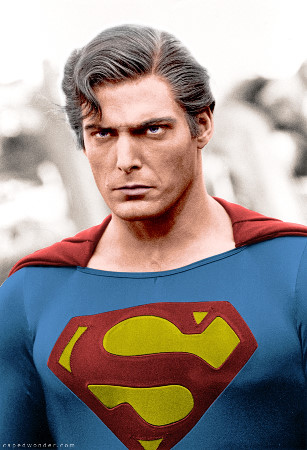
X-Rays, DRANK. Frost Breath, DRANK.
All in all, Kingdgom Come has inspired a lot of new thought concerning my own characters that have been in incubation for years, as well as spurring me to explore the DC universe even further. One thing I like about it is that the capes and heroism aspect feels more played up than the Marvel I've read. I've seen so many gritty and relatively down-to-earth stories recently that seeing idealistic crusaders and all the juxtaposition that can go with it is fascinating. But that's another post for another day. In short, read Kingdom Come, you won't be sorry.
Tuesday, March 26, 2013
The Groof
Larson leaned
his chair back and forth. He set his pen parallel to the notepad in front of
him. The clock on his cellphone read 6:58. Larson uncrossed his legs, turned
away from his desk, and placed elbows on his knees. He rocked his feet to and
fro from balls to heels, and the cellphone showed 7:00. He collected wallet,
phone, and keys and left his office.
He stepped out into the hall and
heard a voice from the living room.
“Dad, where’s the Groof?”
“I put him in the box with your all
your other old toys last night,” Larson said, checking his necktie in the hall
mirror.
“Why?” asked his son, arms crossed.
“Because you’re a big boy now,
Lenny, and it’s time you let go of kid stuff like that.”
Lenny ran down the hallway and
Larson could hear the bedroom door click open, followed by the creak of the old
toy chest. Apparently he hadn’t piled enough toys on top of the stuffed
animal, because Lenny reemerged into the dark hall clutching a doll a third of
his size that resembled a cross between a man and a flightless bird, like a
kiwi. Larson turned from the mirror.
“Why do you think you still need
him?”
“Because,” said Lenny.
“That’s not an answer. Why won’t you
make real friends at school?”
“The Groof IS real! And just because
you go out all the time with a new friend doesn’t mean I have to, too!” The
bedroom door slammed after the boy, and Larson rubbed the bridge of his nose.
He heard tires crunching on gravel in the front yard, and walked to the window.
Outside, a Ford Focus had pulled in
into the driveway next to Larson’s Buick. A young woman emerged, slung a
backpack over her shoulder and rummaged, bent over, in her messy car. Larson went outside to greet her, tried not to look at her behind, and fidgeted with his tie instead: he could not
get the length right.
“Found it!” said Margie, hefting a
chemistry textbook over her head.
“He’s in a mood tonight,” Larson
warned. “We had an argument.”
“Good thing I brought Nemo, then,” she winked.
“You’re so good with him,” Larson
said, exhaling. “Why can’t it be that easy for me?”
“Don’t worry about it Mr. Larson.
Now you go have fun tonight, you deserve it,” Margie said, and hugged him. He
did not expect the hug, and so he stumbled backwards a bit, making the hug
off-balance. They both chuckled, and to Larson's dismay made brief eye contact, and then she went inside while he got into the Buick.
Larson lived in a small town of no
significant name, far removed from the city, and had to drive nearly ten miles
to get to the highway. He wound through roads flagged by pines and could not
settle on a radio station. It was a full moon in a clear sky that night and the
moonlight opened the woods and reflected in the eyes of deer who wanted to
challenge Larson’s authority of the road but didn’t.
He relaxed, he was almost to the
highway, and maybe he’d pressed his suit correctly after all. Then, Larson ran
out of gas. The sound came first, as if his car were grumbling and nodding off
to sleep. Luckily, Larson was able to steer the car to the shoulder of the road
before it did so. He deflated in the driver’s seat, any buoyancy gained in the
ride now lost, and stared at the gas gauge, dipped below “E”, willing it to
rise, even if just by a little.
His Plan B was to retrieve his
cellphone, and the absence of bars in the corner of the screen did not surprise
him. He flipped it closed, turned on his flashing lights, and sat on the hood
of the old, black car. A pair of headlights leered around the bend ahead, but
promptly ignored Larson as they passed. The second pair slowed, yet only for a
moment before going on, and by the passing of the third pair he had slid down
from the hood of the car and yelled an obscenity. He kicked at the dirt which
scuffed a shoe, which brought another obscenity, but then he began to calm
down. Fed up with the lack of roadside generosity, he stamped his feet and
holstered his hands in armpits to stave off the cold.
He peered around the woods occupying
either side of the road, looking for any sign of light from houses down private
roads. He knew he’d seen many such roads around here before. Larson turned off
the flashers, took his keys and phone, and set off south, since he was sure
he’d seen houses closer to the highway. It wasn’t long before he caught sight
of a glow in the woods in the distance. He blew into his cupped hands and
decided to brave whatever denizens of the woods owned the light source.
Larson followed the main road until
he came to a private dirt path. There was a road sign, but it was engulfed in
the overgrowth that formed a tunnel extending twenty or so feet like a hallway
into the woods, the sides of the passage gnarled and impassable tree branches
and trunks.
He stood there and weighed the
chances of entering the tunnel. The light at the end was welcoming like a
campfire, and besides, he needed to make it to this date. He didn’t know how
many more times he could be set up by family or friends from the office. At
some point their address books and friend lists would run dry of women his age,
and what would he do then, dating sites?
Larson straightened his tie once
more, buttoned his suit jacket, and started down the wooded path. He had to
duck at some points and the brush forced him to crouch here and there as he
walked. And as he went on the foliage became so thick that he had to navigate
by touch, pushing the leaves out of the way to be able to make out the light.
Eventually it became so much that he was unsure whether the tunnel was going
straight, or had he changed directions? He hunched down low to get his head out
of the branches, and sniffed a kerosene scent straight ahead of him. He
followed the smell, and the vegetation became less and less, and soon he could
make out a front porch where a large oil lamp hung from the ceiling.
He emerged into the driveway of a
small, white, one-story house. The front porch of which was wide with several
rocking chairs and a couch laden with pillows, all bathed in the orange light
of the lamp. A garage was open on the left side of the house, revealing a Volkswagen
Beetle circa the nineteen forties. The car was white and half-covered with
tarps, surrounded by heaps of helpless lawn furniture, backyard toys, and
tools. Between the garage and the porch was a red door with a half-circle
window at the top. Larson could see a shape moving in what would be the small
foyer and decided to approach the house before he looked any more suspicious.
The outside of the house looked
friendly enough, so he told himself that the residents must be the same. He
climbed the stoop and rapped the door twice. He was checking the time on his cellphone—7:45
and still no bars—when he heard heavy footsteps up to the other side of the
door. Larson let the phone slide into his pocket as the door opened and he
looked up into the face of a seven, maybe eight foot tall man-creature covered
in brown, needle-thin feathers.
“Hello,” it said, removing a pipe
from its thin, curved beak. “I’m the Groof. And you are?”
Larson stepped backward down the
stoop slowly and stared back up with wide eyes.
“Ran
out of gas.”
“Is
that a local name?” asked the Groof, replacing his pipe and puffing.
“No,
it’s Larson,” he replied, rudely looking the oversized kiwi-person up and down.
“Well
come in, then, and we’ll see if we can’t do anything about that name,” the
Groof said as he turned and went into the house.
Larson followed into the entryway
and stood with arms dangling at his sides, mouth lolling slightly open. There
was an oriental rug on the hardwood floor, and a small desk filled with
stationery and strewn with letters.
“My son,” Larson managed to say, “my
son has a doll. It’s you, you’re it.”
“I’m sure he does,” the Groof said,
fumbling in the kitchen. “Whenever a human sees one of us, he runs off selling
merchandise and photographs. I even pose for them sometimes, I don’t know why
nobody ever believes them.”
The Groof went on to tell Larson how
lucky he was to have found him that night, for the homes of Groofs are always
moving, and he told him about how Groofs live, all while Larson tried to
collect himself in the chair by the tiny stationery desk.
“And I get all I need from friends
in the woods. Food, firewood, and water I can find from around wherever I
happen to find myself, but I rely on woodland creatures to bring me things from
town. As you can see, Groofs have grown very fond of human customs over the
years.”
“That’s all very interesting, Mr.
Groof,” Larson said, rising.
“Just Groof is fine, thanks.”
“But I’m late for a date, and as
much as I’d love to hear more stories for my son, do you think you could give
me a lift into town or let me use your phone for a cab?”
“They’re stories for you, too, Mr.
Larson.”
“Call me Larson.”
“Very good. I believe I’ve got a
tank of gasoline you can use in the garage, no cab needed.”
“Thank you so much, Groof,” Larson
said.
“The pleasure is all mine,” said the
Groof, wiping his talons on a towel as he finished putting the tea on. “Please,
follow me to the den.”
“But what about the gas?”
“Already? But I’ve just put tea on,
and it’s nearly done!” the Groof clucked.
“I’ll have to come back another
time.”
“Oh, no, that won’t do. I’ll be on
my way by then,” the Groof said, making Larson a place in a rocking chair near
the fireplace of the den. “Stay for tea and then I’ll give you the gasoline
after, hm?”
Larson couldn’t believe that he was
being blackmailed into tea time by a giant bird, much less that he had accepted
the offer, rolling of eyes or not. He sat, and inspected a chess set on a high
table, high enough for a Groof, wherein each piece resembled something
bird-like or owlish in nature, the kings being miniature reproductions of
Groofs wearing crowns.
The life-sized Groof reentered the
den, carrying a tray with teapot and cups, sugars and milk. They poured their
tea and before the Groof could settle into his monolithic, red armchair, Larson
had gulped half of his tea down. The Groof had only begun sipping with his
pointed beak, not unlike a humming bird, when Larson set his saucer and cup
down and stood to button his jacket.
“You make a fine cup of tea, Groof,
but I’m afraid I must be on my way.”
“On your way where? We aren’t yet
finished,” said the Groof, balancing his teacup between his talons.
“Oh, I’m afraid I‘m quite sated.”
“Well I can see that, but I’ve only
just started.”
Larson looked the Groof squarely in
his golden eyes.
“Look, you promised to help me, and
I’ve met your conditions. This is ridiculous, I have a date tonight, a chance
to make something real happen for me and for my son, and instead here I am,
having tea with an imaginary friend.”
The Groof’s avian eyes wandered in
his teacup.
“Very well, I’ll finish quickly,” he
said and shuffled his chair away from Larson to face the chess board.
Larson stood, watching the Groof go
over what looked like a memorized game for a moment before sinking back into
his seat. The clock on the wall ticked and the fire crackled as the Groof moved
his pieces. Larson’s gaze washed around the room, trying not to look in his
host’s direction, when his eyes settled on a photograph on the shelf. It showed
the Groof accompanied by a smaller version of himself, with the white house in
the background, although instead of pines, the trees were oaks.
Larson cleared his throat and said: “Is
this your son?”
“Hm? Oh, yes,” said the Groof,
setting down a knight shaped like a falcon. “I haven’t seen him in years.”
“Why not?” asked Larson. “Where is
he?”
“Groofing about somewhere with a
house of his own, I’m sure. You see, Groofs are a solitary species after
reaching adulthood.”
“But what about your wife, or I
mean, his mother?” Larson asked, holding the picture frame.
“Groofwives also set out on their
own after the Grooflings are all raised,” the Groof said, back at his game.
“That sounds lonely.”
“It is. But such is the life of a
Groof. And such is our desire for good company from time to time.”
Larson put the picture back in its
place, and looked up and down the lineage of Groofs in portrait, some gray,
some black, some chestnut or downy white. He picked up his chair and took it
over to this Groof at the other end of the chess set.
“Would you like to play a game?”
Larson asked.
“I would!” the Groof hooted. “Let me
put on another pot of tea.”
The Groof told Larson of his family
as they played, nieces and nephews and uncles. He told him about Groofish
cuisine, and important Groofs from history who had influenced the human world.
All this and more Larson listened to as they played, but before long, the Groof
had tired himself out in his excitement and dozed off, warbling as he slept in
the big red armchair.
Larson finished his second cup of
tea and set it down. The fire had been reduced to cinders in the fireplace, and
when Larson checked his phone it read 9:00. They had missed the movie, but
perhaps there was still time to get dinner if he hurried. The Groof still
murmured in his sleep, his great plumed chest heaving up and down as he snored.
Larson crept out of the den, but hesitated at the front door, and scrawled a
quick “thank you” on a note lying on the small desk before leaving.
He found the gas canister in the
garage buried under unused pool toys, even a small trampoline. He took what gas
he needed and returned the rest, leaving the orange glow of the little white
house behind as he drove into the city.
Larson was two hours late in picking
up Sophie, and if he thought the car ride was bad, her face when they pulled
into the parking lot of the Olive Garden was something far worse.
“Look, everything else was booked up
after our reservation expired. That’s finding a last minute babysitter for
you,” he said.
“Let’s just eat, ok?” she said as
she got out of the car, red dress and all.
Inside Larson poked at his pasta and
listened to the family with kids seated nearby. His date was eating at a steady
pace and avoiding eye contact.
“So how well do you know Mike and
Laurie?” he attempted.
“They’re good people. Been trying to
set me up for a while now. I’ve known them since college. Real good at finding
babysitters on time, too.”
He nodded, and set his fork down
when the waiter came with the check.
“Ok, look. I made the babysitter
thing up.”
“Oh, really?”
“What if I told you what held me up
tonight was something amazing. That I ran out of gas and had tea with a giant
man-bird at his house in the woods?”
“I’d tell you to save stories like
that for your kid,” said Sophie, finishing her chicken carbonara. “Look, I’m
sure you have a perfectly good reason for keeping me waiting for two hours. I
get it, I really do. But I don’t have time for this, I have to get up in the
morning. Would you take me home, please?”
“But you don’t understand, I—”
“Just save it, Larson, for both our
sakes.”
It was midnight when Larson got
home. Margie was asleep on the couch, surrounded by chemistry notes. When
Larson woke her he started to explain his lateness, but she shushed him and
gave a congratulatory punch on the shoulder. He went to Lenny’s room, and on
the way he found his Groof doll, left behind in the hallway. Its beaded golden eyes stared back at him. He picked it up, and entered his
son’s room.
“Lenny, wake up,” he said, gently
shaking his shoulder.
“Mmm, what is it? Dad?” he said,
rubbing the sleep from his eyes.
“Guess what? I was wrong, Lenny, the
Groof is real. You were right!”
“What? What do you mean?” the boy
sat up in his pyjamas.
“Come on, I’ll show you. Get
dressed, quick!” Larson went downstairs to find a gift for the Groof, he
settled on donuts. Lenny was by the door, doll in hand.
“Where is he? Did you meet him?”
asked Lenny.
“He lives in the woods, you’ll see.”
They drove down the highway to where
the wooded tunnel had been, but when they arrived, there were only normal
trees.
“It was right here, I promise. The
Groofhole must have moved like he said,” Larson said, pulled back onto the
road, and checked up and down the wooded road. But he found nothing, and
stopped again in the shoulder.
“I’m sorry, Lenny, about what I
said before I left,” Larson said, laying his head on the steering wheel. “And
about this too, I swear I met him. And he had a car, and pictures and a chess
set, and—”
“It’s ok, Dad. I believe you,” Lenny
said, as he climbed into his father’s lap. And he sat there, a miniature
version of a huge bird monster stuffed between them.
“I love you, son. Do you know that?”
asked Larson.
“I know, dad. I love you too.”
Truck
When I woke, I
had to call for the nurse. That
was one thing I wouldn’t expect—usually in the movies the nurse is standing
over the soldier right when they wake up. So I laid there in some
striped smock, yelling, “Nurse!” because that’s what the war veterans moan when
they wake up after their legs have been blown off, right? I counted limbs,
fingers, and toes as I heard footsteps approaching my bed. Four, ten, and ten.
Good.
“Well, that didn’t take long!” said
the woman in kitten-patterned scrubs after she pulled the curtains back. She
grabbed the chart off the end of my bed and wrote something on it.
“What didn’t?” I asked.
“You were only out for just under
two hours. Tell me, what was the last thing you remember?”
I looked around the hospital room:
it was calm. There were other beds up and down the long room, but they were all
empty. And the only people around were orderlies or other nurses cleaning up or
passing through.
“I was trying to cross the street,
on my way home from campus, to go to the post office, and I think I tripped and
hit my head,” I said. The nurse laughed.
“You got it half right. How do you
feel?” the nurse asked.
“I have a headache but other than
that I think I’m okay. What do you mean half?”
“Honey, you were hit by a truck. Hit
and run.”
I
had to laugh at that. “You mean, like, the truck stopped a little bit short and
knocked me over, or what?”
“No, the EMTs say people on the
street saw it run smack into you. Must have been going forty, fifty miles, they
said.” Then I decided to expand my health check from fingers and limbs to
frantically running my hands over my sides and stomach. The nurse laughed
again.
“Where did it hit me?”
“Lower abdomen is what we heard from
the bystanders. But we ran x-rays and nothing’s broken. No bruises, nothing
aside from the lacerations on your face.” I reached up and felt the gauze still
taped to my cheek. I remembered the asphalt coming up to greet me. But I
thought that I would have remembered a box of metal on wheels flying into me.
“You’re shitting me,” I said.
“Look, honey, I’ve seen stranger
things working around here. You can believe me or not, but count this as a
blessing. You got to have someone up there looking after you.” She finished
writing and marched off down the hall, cats of all different colors prancing on
the back of her shirt. I looked over and saw my clothes neatly arranged on a
chair next to my bed, my shoes and just jeans and a t-shirt, but I started to panic when the
blue Duke University sweatshirt I had been wearing wasn’t there. I tore the
pile of clothes apart and found it neatly folded under my bra and underwear,
and sighed with relief.
I got dressed and had to sign a
couple of papers before they would let me go. Nurses here and there who must
have had heard about my accident looked me up and down suspiciously. I left the
hospital and realized I’d never been there before, and had no idea how to get
home. I went back inside and asked an orderly how to get to my street, and I
knew none of the street names that came out in jumbles and nodded as if I did
know and then went outside again.
After wandering down the street I
decided to follow people who looked like they knew where they were going, men
in suits mostly. This led me to the bus station, and I found my way onto a bus
home from there. The bus was cold and I stuffed my hands into the overlong
sleeves of the blue sweatshirt for warmth. It had been my mother’s father’s,
and I wore it whenever the weather allowed. To me it felt warmer than a down
coat.
I came into my apartment and
everything looked the same as I had left it that morning. I don’t know why I
expected anything to have changed. But when you’re in an accident like that and
you have to come home from having woken up somewhere else, you feel surprised
to see your room and your things again. And it’s almost as if you can tell
they’re surprised to see you, too.
I wasn’t sure what to do next.
What’s the first thing to take care of after surviving a car crash? I had
gotten sleepy on the bus ride, so I lay down on my bed. I tried to remember the
truck hitting me, and as I dusted off the memory of falling in the street, like
an archaeologist brushing dirt off an old bone, I started to make out the truck
slamming into my side. I couldn’t remember any pain, but I saw the face of the
man driving, shaggy, blonde bangs, lower lip trembling as if he were about to
burst into tears, mortified.
Then everything was hard to picture,
it was as if my vision was obscured by some sort of mesh in front of my face,
like a bee keeper’s mask. I stumbled around in the street as cars swerved
around me and voices called, “This way!” and “Over here!” but I couldn’t find
my way out of the intersection. I reached out with both hands to feel someone
or something, but the voices ebbed away, and I was being consumed by the
whirring white noise of cars roaring on all sides.
I woke up to my phone ringing. I
answered, and it was my mother.
“Baby, are you okay?” said the fuzzy
approximation of her voice through the speaker.
“Yes, Mamma, I’m fine.”
“The hospital called when they
brought you in. I about had a heart attack! What happened? Are you going to
press charges?”
“No, Mamma, the man barely tapped
me. I just fell and hit my head, that’s all,” I lied. “He came to hospital and
apologized over and over again. I just told him to go home.”
“Well, Alice from work says even if
you feel fine now the pain might could come later. You could have whiplash and
not even know it!”
“I’m fine. I’ll let you know if
anything does happen, I promise.” The phone was silent.
“Okay. I’m just glad you’re okay.”
She paused. “Did you get the package yet?”
“No, I didn’t get the package,” I
said, getting off the bed and walking into the kitchen. “I got hit by a truck.
What’s in it anyway?”
“Just some old things I thought
might help you find some direction,” she said.
“What’s that supposed to mean?” I
asked, sitting at the kitchen table.
“Baby, you’re so lost these days,
always switching up your major. And I can’t help but feel it’s my fault.”
“What?”
I asked, ready for a consolation trip.
“It’s
just that ever since we moved across the state you’ve cut off from your
heritage, my family and not to mention your daddy’s,” my mother said. “Why, you
never even got to meet your own granddaddy.”
“That’s
not your fault, Mamma.”
“I know,
baby. I just think you need to find out where you’re from to find where you’re
going.”
“Let me decide what I need,” I said,
rubbing my eyes.
“Okay. Are you going to get the
package now? Should you be driving?”
“The doctor said it was okay.”
“All-right, then. I love you. I’m
glad you’re okay.”
“I know, Mamma. I love you too.”
I got up from the table and got my
keys. I left the apartment, got into my car, and headed to the post office, one
hospital trip later than I’d meant to. I never had to go to the post office
before, but this time they’d tried to deliver my package to my apartment while
I wasn’t there one too many times and finally told me just to pick it up at the
shipping facility.
It was dark when I got on the road
and I had to follow directions I’d scribbled down from the internet onto a sticky
note. They took me down the back roads behind campus, past the train tracks and
into where it was mostly warehouses. The roads had few streetlights and many
transfer trucks were parked all around the black parking lots. My headlights
shone onto and reflected off of the sides of the trucks as I drove, and as I
squinted at the street signs I found myself on a road with the post office at
the end of it, lit up alone in the night.
I parked and inside the post office
it was all yellow light and brown boxes. There was a kind of conveyor belt like
in an airport where the baggage comes out, but it was stopped, and an old lady
stood arguing with a middle-aged woman in a blue uniform. The old lady needed
her husband’s medicine, but either it hadn’t arrived yet or she didn’t have her
husband’s I.D. to be able to take the package anyway. I think it was a little
of both.
They came to an agreement to wait
for the last truck to come back before the office closed, and then they would
see what they would see, and it was my turn to ask for a package. The old lady
hobbled over to a seat along the wall. I approached the woman in uniform who
had frizzy red hair and bags under her eyes and asked for my package. She went
in the back and I sat down next the old lady.
“Good gracious, sweetie, what
happened to your face?” the lady asked. “Oh, look at me, mouthing off, no
manners at all. Please, don’t answer that. I’ve had a long day, is all.”
“No, it’s alright,” I said. “I was
hit by truck today.” The lady pulled backwards and removed her eyeglasses, as
if to inspect me more thoroughly.
“A truck?! Now, I never seen nobody
walk up into a post office like that after a car accident,” she said. She wore
a kerchief over what little hair she had left.
“You’re telling me. I remember going
down and the next thing I know I’m in a hospital, nurse telling me I’m fine,
all but the scratch on my cheek.”
“Nothing but a little scratch, huh?”
she said. She pulled at the sleeve of my sweatshirt, stained and with a
cigarette burn on the cuff. “How long you had this old thing?”
“This? It was my grandfather’s
before he died,” I said.
“Mhmm. I thought so, this old rag’s
got power in it. He’s looking out for you, girl.”
I
laughed. “Power? What does that mean?”
“Love! Who else wore that shirt
before you? Your mamma or daddy?” She settled back into her chair and closed
her eyes. “I can feel it, ain’t nothing could hurt someone wearing something
with that much love left on it.”
I squeezed the fabric of the
sweatshirt in between my fingers, as if maybe the power she spoke of made it
thicker, like armor.
“Shoot, we all got to have someone looking out for us. Like my
husband, if I weren’t running all over town trying to get his damn pills—oh,
excuse my language darling.” She blushed.
The woman came back from around the
corner holding a small package, about the size of a shoebox.
“Sign here,” she said, and I did. I
took the box and opened it right there. Inside was an old cigar box, inside
that a pile of old letters and pictures, a small journal at the bottom. I
picked one of the photos up. It’s strange to see someone you’ve never met who
looks so much like you. Maybe because they resembled you so much they might
have thought the same way, or had the same problems as you. But how would you
ever know?
“Is that him?” the old lady next to
me asked.
“Mhmm.”
“See? He’s looking out for you.” She
winked at me.
I put the picture and the box away
and got up.
“I hope you get your husband’s
medicine,” I said.
“Oh, don’t worry about that,” she
said. “I always get my way in the end.” I smiled at her and told her goodnight.
Outside the post office I looked
through the photos again. I found one of my grandfather holding my mother as a
baby. They were on the porch swing at the old house, and my mother was pulling
the glasses off of his face. He was laughing and looking right at the camera,
at me.
I heard brakes and the slamming of a car door near me,
and saw a faded blue truck with a large dent in the right side of the bumper. A
blonde man was standing, staring at me with a look on his face as if he’d seen
a ghost.
“Oh god, it’s—how are you—I’m so
sorry,” he said.
“How the hell do you think I am
after getting run over?” I said, crushing the shipping package in my fingers.
“Well, you look, uh…”
“Yeah, I’m fine, for God knows what
reason. And now I have to pay a bill for an x-ray that showed my spine is
stronger than your busted-ass truck anyway,” I said pointing the box at the
pickup.
“Look, please just don’t call the
cops,” he said, eyes tearing up. “I can’t handle that right now. I didn’t see
you, I swear. I fucked up again, I’m sorry.”
He was crying now, and I thought
about the story of when my grandfather ended up giving a job to the man that
tried to steal the brand-new lawnmower out of his shed. I don’t remember all
the details, and they change every time my mother tells the story anyway. But
the man was on his knees slobbering as I thought, and I walked towards him,
extended a hand, and awkwardly patted his shoulder.
“Look, I’m not going to tell
anybody. Just get out of here,” I said.
“Really?” he asked, getting to his
feet and wiping his nose.
“Yeah, just get lost. After you get
your package or whatever.”
“Oh, thank you. Thank you so much!”
he said, grabbing me in a hug. “You know, you must do a damn good job eating
your vegetables. Getting up after a hit like that.”
“No,” I said, after he let me go and
I got out my car keys. “I’ve just got someone looking out for me.”
Saturday, June 16, 2012
The Arcade: Chapter 3
Ok, so the first thing you're going to notice about this one is that it is in third-person omniscient point-of-view. There was a huge gap of time in between when I wrote parts 1 and 2, and then part 3, so I kind of forgot that they were supposed to be in first person.
So just forget about that and enjoy it!
---
“Prepare for atmospheric reentry,”
cooed the computer system onboard the escape pod which was plummeting towards
the surface of an Earth-like planet. The small, spherical, waiting room-like
craft began to rock violently as blue ocean turned into the whiteness of clouds
ripping past. Just as Steve grabbed at his seat’s harness in an attempt to
stabilize the status of his stomach, which was quickly approaching barf levels,
the pod announced in a waitressy tone:
“Enabling comfort protocols,” and
the thrashing suddenly ceased, the sound of rattling components replaced by
smooth jazz. The image of the ever-quickening approach of the planet’s surface
on the video screen over the shoulder of Steve’s robotic companion, JORDI,
turned into one of kittens playing.
“Coffee, sir?” asked JORDI,
extending in his metallic hand a plastic cup he’d retrieved fresh from a
dispenser on the wall.
“Sure, thanks,” obliged Steve,
noticing that JORDI was actually tapping his metal fingers against one knee to
the rhythm of the muzak. There was a soft thud underneath Steve’s feet not
unlike that of an elevator reaching ground floor, and the hatch slid open,
revealing a green countryside complete with picturesque village in the
distance.
“So up next is Harkenshire,” Steve
mused.
“You are familiar with this planet,
sir?” chirped JORDI, fiddling with an access panel on the side of the pod.
“You could say that. And I’m sure I
know which session this is too,” but before he could continue:
“Life forms! Seventy meters north!”
cried the metal man, and sure enough, a raiding party composed of equal parts
ogres and orcs, with a smattering of kobolds for good measure was approaching
the village, smashing their crude weapons together in anticipation as they came
nearer to the puny town gates.
“Calm down,” said Steve, easing
himself down onto the ramp produced by the empty pod. “There are enough heroes
at the inn in town to clean up that mess. Rob’s character has a new staff full
of charges to try out.”
The monsters in the distance were
joyfully ripping logs from the village’s shield wall, climbing over each other
for a chance at the terrified townsfolk. Helpless villagers. Then Steve
remembered exactly what was going to happen during this particular session.
He got up in a hurry, tossing away
his second cup of space-coffee. “JORDI, we have to go help them!” Without
question the android abandoned his maintenance work and was trotting alongside
his captain, restraining his hydraulic strides to match.
As they closed in on the dilapidated
gates they could see the fighting within. The meager untrained forces of the
town guard were being eaten alive (in some cases more literally than in
others), but in the center of the town square three warriors, obviously player
characters due to their ludicrous amount of costume and armor detail, fought
off the beasts in a triangle formation.
Reaching and passing through the
broken wall, Steve and his robot entered the fray, Steve staying behind JORDI
as he turned snarling, blunt instrument-wielding fiends into piles of dust with
his vaporizer. Bolts of arcane energy pierced through the abdomens and heads of
orcs, flying from the tip of a robed and bespectacled wizard’s staff. He was
smiling as a boy a quarter of his age, blasting away, flanked by an elven
huntress, loosing shimmering magical arrow after arrow while her enormous
cleavage attempted valiantly to escape its meager restraints.
On the other side was the character
Steve had played, a battle-hardened cleric smashing ogres with morning star and
enchanted shield alike. In the midst of the chaos Steve was searching, hoping
that the girl was still alive when he saw her: the spitting image of his first
girlfriend, Tracy, red hair, freckles and all in the grasp of a particularly bloodthirsty
orc by the back on her plain dress. Rob’s wizard was mopping up the remaining
opposition with some sort of vortex spell while the cleric finished the last
kobold with the sharp edge of his emblemized holy shield, and the huntress kept
an arrow knocked and trained on the final orc with his hostage.
Steve knew how it was about to go
down. He’d replayed it dozens of times in his head at night after the infamous
dumping after sixth period. The elf woman shouted for the monster to unhand
her, to whom it laughed and snorted, and when the glimmering arrow was
protruding from the back of the orc’s head, it had already yanked its axe
across the girl’s throat. And even though the cleric roared in dismay, her
wound too grave even for cure heavy wounds, the sixteen-year-old player who
held the dice chuckled and smirked.
But not this time.
“JORDI, now!” yelled Steve, and with
a speed even faster than that of the huntresses elvish reflexes, the robot
aimed and fired his arm-mounted cannon, the orc’s molecular structure
destabilizing, its axe falling in the dirt, and the girl unharmed save for a
healthy lifelong fear of all orckind.
“My, what a magnificent golem you
have there, young man!” exclaimed the wizard.
The Arcade: Chapter 2
“Can’t you just use divine magic or
something to make me less anxious?” I asked, with both arms wrapped around my
torso, checking for spiders. We’d just gone down into the basement and the only
light coming in was from the open trapdoor to upstairs. The light only went so
far and the chain to turn the one light bulb on was swinging almost
imperceptibly just beyond where the light reached. I just knew there were
spiders there. That’s where they live, in the darkness wherever your hand needs
to go.
“It doesn’t really work like that.
Remember the whole non-interference thing?” said my angelic companion, only a
few steps behind me.
“Ok, you need to explain this to me
right now: you can give me weapons, but can’t give me the equivalent of a holy
aspirin. Yet there are demons here, what about them?”
“One demon, and it’s similar to a
non-aggression pact on Earth. This demon is breaking it. And the ways in which
I’m allowed to assist you are complicated; difficult for a mortal to
understand,” Mr. Greaser replied, adding a: “No offense,” after a pause. “If
you want I can create light around that drawstring,” he added, a halo of golden
light appearing around the drawstring and light bulb.
“But you can’t just turn the light
on, or make enough light for the entire room?” I said, my brow furrowing.
“Again, that would be going too
far.”
With an exasperated sigh I pulled
the spider-free string and the rest of the basement was illuminated. It wasn’t
that big of a place. Part of me couldn’t believe I’d been afraid this long, but
still I felt the need to investigate every corner for things that crawled
around. So far, nothing, and the box that should have contained all my old
D&D things and campaign materials was empty. The cardboard box marked
creatively “Porn” by my friends was in the upper left corner of the room,
devoid of anything save for some dice. I felt that maybe some of what the angel
had said about alternative methods of killing a demon might require something
like this. After all, this was how anything was killed in a table top RPG. So I
stashed them in my pocket and looked around.
“What now? I don’t see any demons.”
“This is not the extent of its
lair,” explained Greased Lightning, and pointed to a smooth metal slab on the
east wall of the room. As I walked toward it I realized it was an outer hatch
to the USP Star Phoenix, the intrepid
vessel of a band of space adventurers whose campaign I had penned. The logo was
there just as I’d drawn it, gilded phoenix surrounded by engraved stars. I
couldn’t help but smile as I touched the surface, it felt so…validating. Like
one of my dumb stories had been made into a movie.
But as soon as my fingertips brushed
the surface a small black screen on the left side of the hatch read: “CAPT.
JOHNSON, STEVEN. ENTRY ADMITTED,” and the whole slab slid upward, revealing the
interior of the Star Phoenix. I stood
there on the other side grinning like an idiot until the angel said: “You do
remember that there is a-“
“SYSTEMS MALFUNCTION,” cried the
ship’s computer, Ellen, as not only the metal of the doorway and the ship
beyond lurched violently, but the entire basement behind too, as if it were all
one interconnected vessel in outer space. I was thrown to the floor inside of
the ship by the shaking and when I looked back the hatch had closed behind me,
with the angel standing inside as if the entire place weren’t convulsing like
an amusement park ride.
“Ellen, what’s happening?!” I yelled
over the din of sirens and what sounded like enemy fire.
“PERIMETER DEFENSE DRONES ARE MALFUNCTIONING
AND READING THE SHIP AS AN ENEMY TARGET,” she replied curtly. Now I remembered.
This was the part where Tighdarians hacked the drones and set them against us,
I think George’s character had had space-sex with one of the king’s
space-daughters.
“Sir?! What are you doing still
aboard? The others have jettisoned in the escape pods, and what happened to
your power suit?” screeched a humanoid, bipedal robot as he tumbled around the
corner.
“JORDI!” I yelped with more 10-year-old
enthusiasm. He stayed behind to go down with the ship and make sure the pods
got away safely, one of my more tragic storylines.
“Sir, we must get you to the final
escape pod before it’s too late!” the automaton intoned, lifting me to my feet
and proceeding down the hall. I began to follow him when I remembered the angel
behind me.
“Aren’t you coming?” I said,
motioning towards the escape pod.
“No, it seems you’ve found a new
companion. He can show you the way,” he said, combing his pompadour and staring
at his reflection in the steel wall. “You will see me again, Steven. Until
then, good luck,” the angel said, smiling. He turned toward the hatch but
before he pressed the button to open it I remembered something.
“Hey! You never told me your name.”
“It’s Michael,” he told me, opened
the hatch, and stepped into what was now outer space. The hallway was suddenly
filled with suction into the vacuum beyond the hatch in the seconds it remained
open, and fortunately there was a railing protruding from the wall to hold
onto.
“Jackass,” I muttered under my
breath before starting towards the only remaining escape pod. JORDI stood next
to it interfacing with the terminal, programming the pod’s flight path.
“You’d better come with me, JORDI,”
I shouted over the sirens, pulling at his metallic arm as I stepped into the
small, yet roomy vessel.
“But the ship, she might be saved,”
suggested the android.
“That doesn’t matter wherever I’m
going. I need you.”
“Very well sir,” JORDI consented.
And drifting through outer space, I got to see my own creation, the starship
USP Star Phoenix get demolished with
my own eyes, plasma glinting in streaks from the drones that surrounded it like
a swarm.
This was one of the pretty-cool
things that happened to me.
Subscribe to:
Posts (Atom)